
- Founded
- 1902
- Headquarters
- Post Falls, Idaho, USA
- Specialty
- Fixed-blade hunting and survival knives, folding pocket knives, kitchen cutlery
- Category
- Knives
- Website
- buckknives.com →
Our verdict
Buck is on this list because they are uniquely good at marrying premium modern materials (S35VN, BOS heat treatment, G10) to the kind of build quality that comes from being a family company that has been making knives in the United States since 1902. Their lifetime warranty is real, their leather sheaths are genuinely made in the USA, and their heat treatment is widely regarded as the best in the industry.
Background
Buck Knives was founded in 1902 by Hoyt Buck, a 13-year-old apprentice blacksmith in Kansas, who developed a heat-treatment process that let his blades hold an edge longer than anything else on the market. The company became a household name in 1964 with the release of the Buck 110 Folding Hunter — the lockback folder that effectively created the modern folding-hunter category and is still in production today.
Buck has remained family-owned across four generations. Manufacturing was based in San Diego from 1947 until 2005, when the company moved its operations to Post Falls, Idaho — a move done specifically to keep production in the United States.
How we use Buck
Buck folders are many people’s first “real” knife — the 110 Folding Hunter has been the gateway pocket knife for generations of hunters, and it still serves as a go-to for field-dressing whitetail and as a daily-carry workhorse. More recently, Buck’s fixed-blade lineup has caught our attention with the 663 Alpha Guide, which we cover in depth in our long-form review.
What sets Buck apart — BOS heat treatment
If you read knife forums for any length of time you’ll see the phrase “Buck’s BOS-treated S30V” or “BOS S35VN.” This refers to Buck’s proprietary heat-treatment protocol, developed by metallurgist Paul Bos, who joined Buck in the 1990s after running his own commercial heat-treating operation.
Heat treatment matters more than most consumers realize. Two knives can use the same steel — say, S35VN — and perform very differently because of how the steel was hardened, tempered, and stress-relieved. Buck’s BOS process consistently runs S35VN at around 60 HRC with excellent toughness and edge stability, and the knife community widely considers BOS-treated Buck blades among the best executions of any given steel anywhere.
The Forever Warranty
Buck’s Forever Warranty covers any Buck-made knife for the lifetime of the original owner. The terms have not meaningfully changed in decades. Send a damaged Buck back to Post Falls, they’ll repair or replace it.
In practice, the Forever Warranty is the kind of policy that long-time owners actually use — for snapped tips after batoning gone wrong, wobbly handles on decades-old folders, broken pivot pins. Buck has a reputation for fast turnaround and for sometimes returning a knife sharper than it left.
Where Buck falls short
We’re honest about the trade-offs.
At the absolute high end, Buck does not compete with custom makers or with semi-custom premium brands like Chris Reeve, Spartan Blades, or Bark River — knives that cost two to four times as much. If you want exotic steels (Magnacut, M398, etc.) or hand-rubbed finishes, Buck doesn’t go there.
At the entry level, the basic Buck folders (Bantam line, some of the lower-tier 420HC offerings) are fine but not exceptional — for similar money, a Morakniv Companion or a CRKT Drifter will give you a comparable knife. Buck’s value proposition gets stronger as you move up their lineup.
Bottom line
Buck is on our Recommended Brands list because they are unusually consistent: 120 years of family ownership, USA manufacturing, in-house heat treatment that actually means something, and a warranty backed by a real service department. When we recommend a Buck, we’re recommending a category-defining piece of American hunting heritage that is still meeting its own standards.
If you only buy one Buck this year, the choice depends on what you actually need: for backcountry survival and bushcraft, the 663 Alpha Guide is the cleanest expression of everything Buck does well with modern premium materials. For everyday hunting and the kind of folder you carry on your belt for the rest of your life, the 110 Folding Hunter is the original and still the right answer.
Why we recommend them
BOS heat treatment is the real differentiator. Buck's proprietary heat-treat protocol — developed by metallurgist Paul Bos — consistently produces blades at the upper end of what their steel can deliver. BOS-treated S35VN is a legitimately reference-grade execution of that steel.
Lifetime warranty that hasn't changed in decades. Buck's Forever Warranty covers any Buck-made knife for as long as you own it. Send it in, get it serviced or replaced. Same warranty your grandfather had on his 110.
Genuinely USA-made leather sheaths. Most knife companies cut corners on sheath construction. Buck's leather work is done by US leatherworkers and the stitching, edge burnishing, and snap retention is the kind of detail you stop noticing only after 30 years of carry.
A real range of price points. The Buck 110 Folding Hunter starts around $50; the 663 Alpha Guide we just reviewed lands at $229. There's a Buck for every budget, and quality scales honestly with price — none of the lineup feels like a marketing tier.
Family-owned, still American. Buck has been in the same family since 1902. Manufacturing moved from California to Idaho in 2005 but stayed domestic. Customer service is staffed by people who use the products.
Product lines
What they make.
Fixed-blade hunting & survival
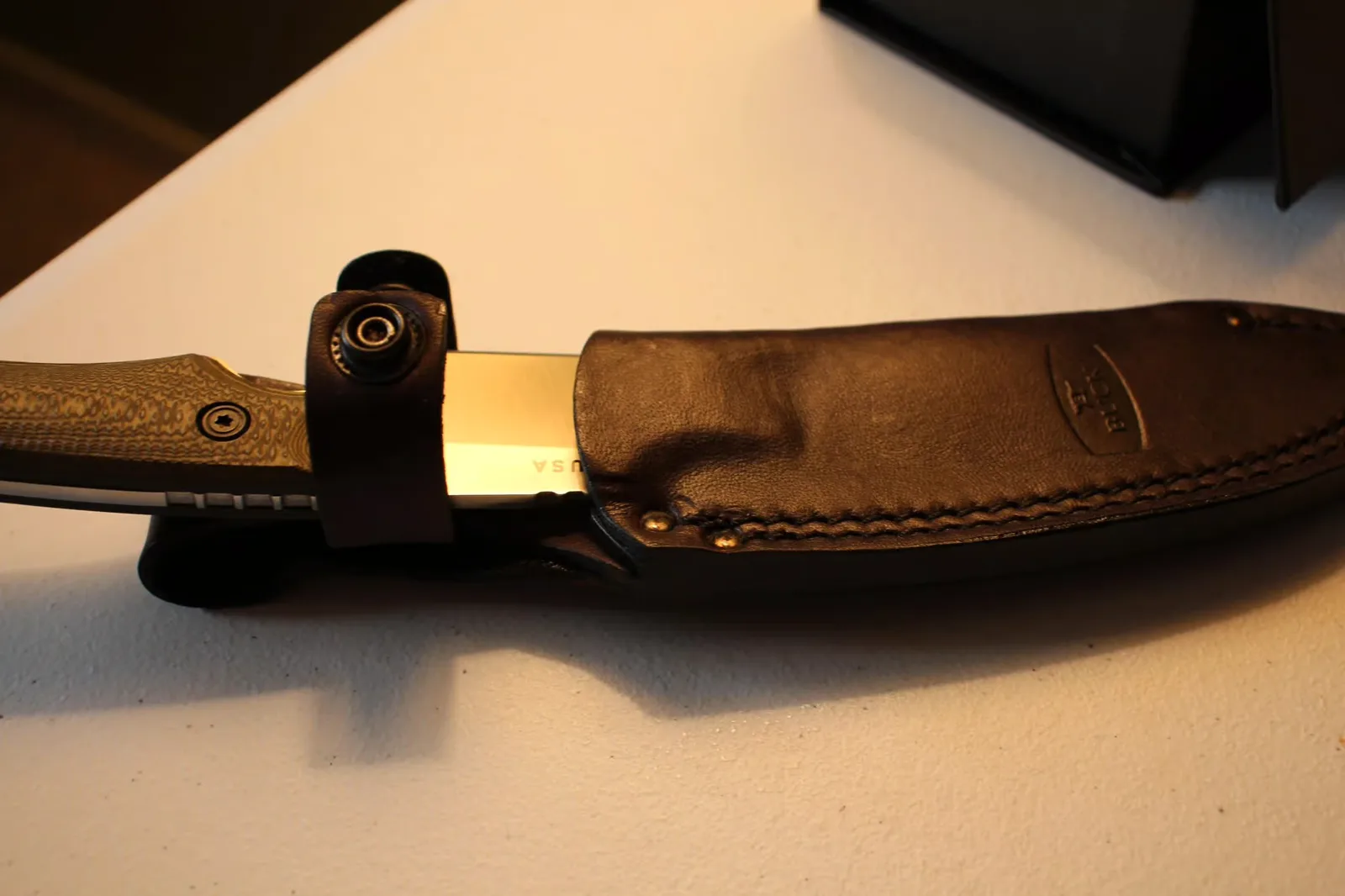
The 119 Special, 120 General, and the modern Selkirk and Alpha Guide series. The 663 Alpha Guide (S35VN, G10, leather snap sheath) is the modern flagship — see our full review.
Folding pocket knives
The 110 Folding Hunter is the most copied folding knife in American history — every Buck-made 110 still uses the same lockback design from 1964. The 112 Ranger is the same idea in a smaller package.
Bushcraft & EDC
The Vantage and Bantam series are Buck's modern EDC line; lighter, more pocket-friendly, with steels in the 420HC to S30V range.
Kitchen & specialty
Buck still makes a small line of kitchen cutlery, and their fillet knives have a small but devoted following among saltwater anglers.
Reviews
Our hands-on reviews of Buck Knives products.
Knives
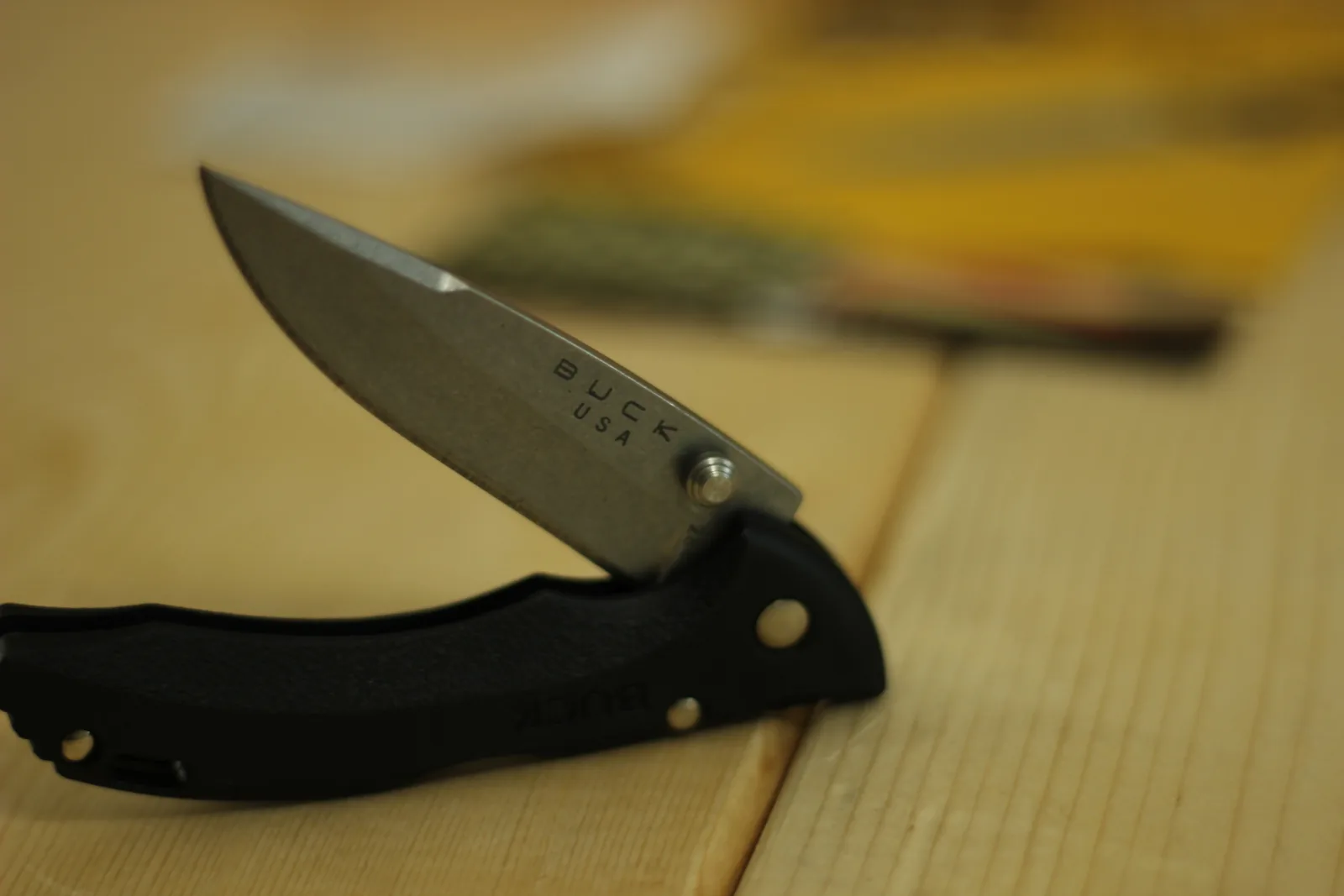
Buck 284 Bantam BBW Review — The 1.5-Ounce American Lockback That Costs Less Than a Box of Ammunition
4.3 / 5 · $31.00 MSRP (street ~$21)
420HC at a stated Rc 58, a 2.75-inch drop point, glass-reinforced nylon scales and 1.5 oz on the scale. Made in Idaho, backed by the Forever Warranty, and sold for about twenty-one dollars.
Read review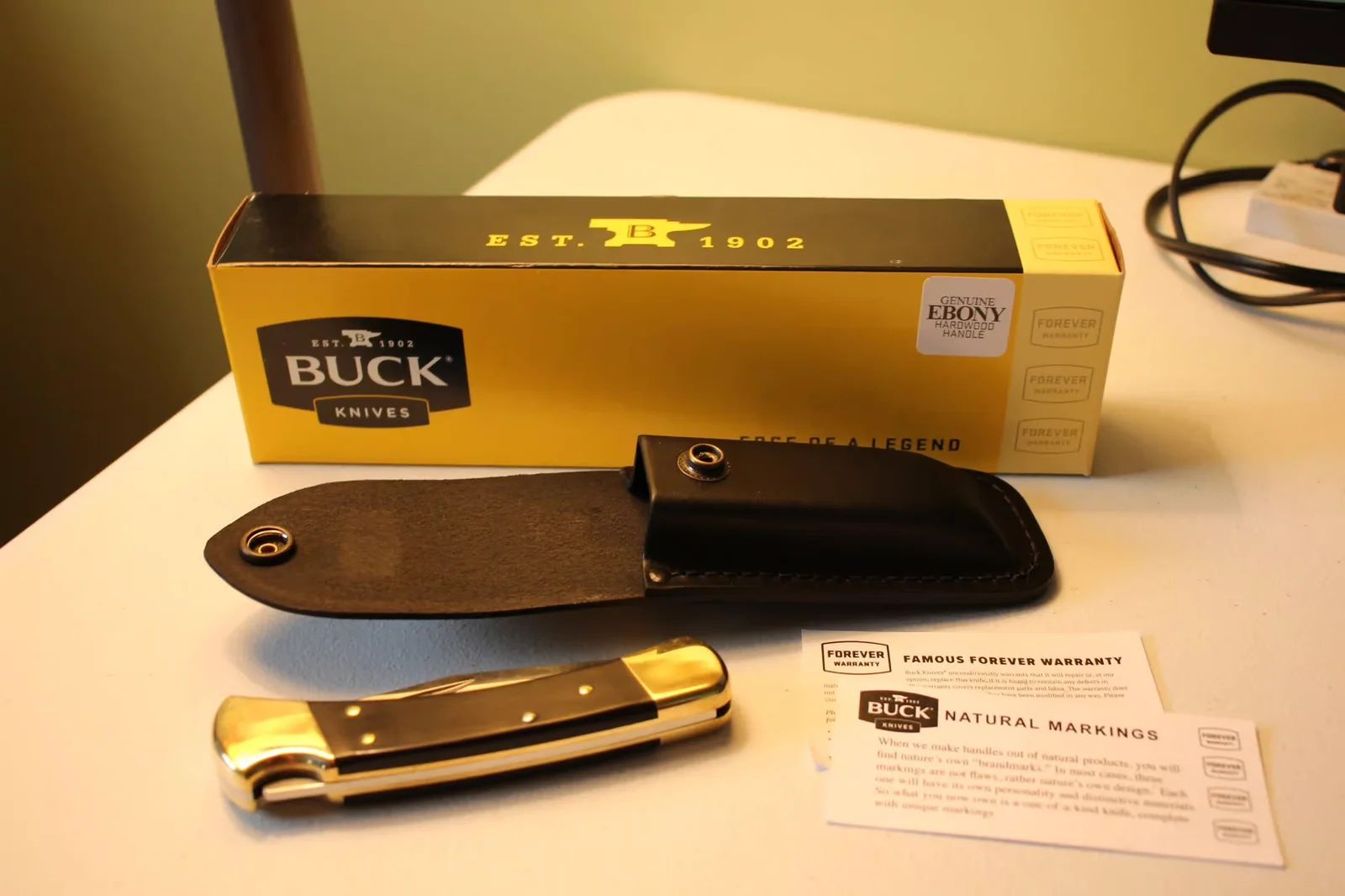
Knives
Buck 110 Folding Hunter Review — The Knife That Made the Lockback Famous
4.9 / 5 · $104.99
420HC with BOS heat treatment, ebony hardwood scales, brass bolsters, USA leather sheath. Our long-form take on the folding hunter that has been in continuous production since 1964.
Read review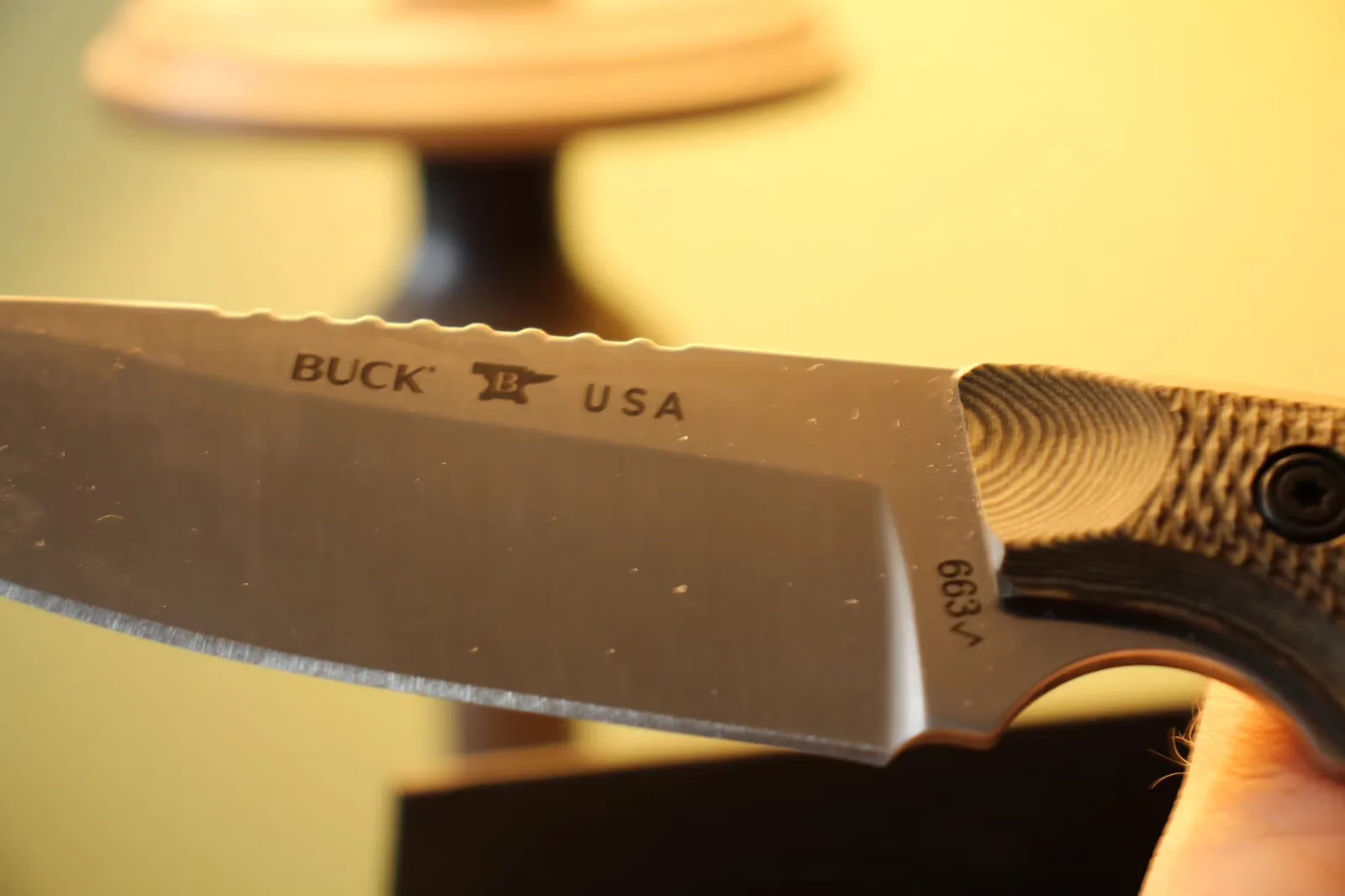
Knives
Buck 663 Alpha Guide Review — The S35VN Survival Knife That Earns the Hype
4.8 / 5 · $229.00
S35VN steel, BOS heat treatment, G10 handles, USA-made leather sheath. Our long-form take on the modern Buck flagship survival knife.
Read review