01 — Pillar · Hunting
Expert guides and Q&A about 17 remington varmints.
Q&A in this topic
60 total
The .17 Remington offers advantages over the .22-250 for varmint control due to its flatter trajectory, reduced wind deflection, and lower recoil. This results
Special regulations for .17 Remington hunting vary by state, but common restrictions include minimum caliber requirements, species restrictions, and season date
The .17 Remington is effective against small varmint species, but may struggle with larger or more aggressive animals.
Using lighter bullets in the .17 Remington can benefit varmint hunters by reducing recoil, conserving ammunition, and producing less damage to the hide and cape
Yes, there are effective suppressor options for .17 Remington rifles, including silencers from manufacturers such as Dead Air Armament and SilencerCo.
Using a .17 Remington on larger varmints raises concerns about excessive wounding and potential suffering due to the smaller caliber's limited stopping power an
Yes, several states restrict the hunting of certain game with .17 Remington rifles. These restrictions often apply to large game such as deer, elk, and bear. Hu
For .17 Remington varmint hunting, a 20-grain bullet is a popular and effective choice, offering good penetration and expansion on small game like rodents and r
Cleaning a .17 Remington rifle after use involves a simple process of disassembling the rifle, wiping down the barrel and action, and applying a thin layer of l
The .17 Remington is an ideal caliber for coyote hunting in conditions with a temperature range of 50-70°F (10-21°C), moderate wind speeds of 5-10 mph, and a cl
When hunting in urban areas with a .17 Remington, it's essential to use a quiet rifle, wear camouflage, and engage targets at close ranges to minimize the sprea
For a .17 Remington varmint rifle, consider optics with 3-9 or 4-12 power, such as a 2-7x32mm or 3-9x40mm, for versatility and long-range shots. Higher magnific
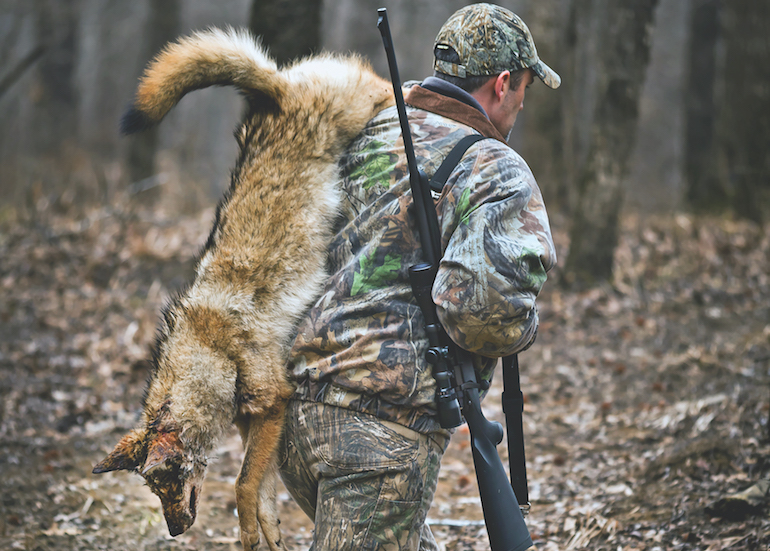
Transporting .17 Remington rifles in the field requires careful consideration to ensure safety and efficiency.
New hunters using the .17 Remington should always wear ear protection and follow basic firearms safety rules, such as keeping the muzzle pointed in a safe direc
SHOOTING POSITIONS FOR .17 REMINGTON VARMINT HUNTING: The best shooting positions for .17 Remington varmint hunting typically involve a prone or kneeling positi
To hunt coyotes with a .17 Remington in the evening, focus on using a high-powered scope, such as 4-12x, and a sound suppressor to reduce noise and increase ste
Best time for .17 Remington varmint hunting is generally during the spring and early summer months, when varmints are more active and easily hunted. These perio
.17 Remington ammo can be reloaded with moderate difficulty, requiring precision in bullet seating depth and consistent case preparation.
The .17 Remington can be used for hunting badgers, but its effectiveness and legality depend on various factors, including the state's hunting regulations and t
Yes, the .17 Remington is an effective caliber for targeting ground squirrels due to its flat trajectory, low recoil, and small diameter bullet. It provides a h
While the .17 Remington is a suitable cartridge for varmint hunting, it may not be the most effective choice for hunting raccoons at night due to its limited po
Yes, .17 Remington is an effective caliber for hunting jack rabbits, offering sufficient power and flat trajectory for successful shots at moderate ranges.
Yes, you can hunt nutria with a .17 Remington during the summer, but it's essential to consider the rifle's effective range and the nutria's behavior in hot wea
You can hunt nutria with a .17 Remington rifle, but check your state's wildlife regulations for specific requirements on minimum caliber restrictions.
Yes, reloading .17 Remington ammo at home is relatively easy, provided you have the necessary components and equipment.
Yes, you can shoot a .17 Remington in early morning light conditions, but make sure to use a scope with a high magnification (at least 4x) to compensate for the
Yes, you can use .17 Remington for hunting foxes legally, but you must check local regulations for specific requirements, such as minimum caliber restrictions o
Yes, you can use .17 Remington for hunting groundhogs in summer, but it requires precise shots and an understanding of the cartridge's ballistics.
Yes, the .17 Remington is effective for controlling high predator populations, offering a flat trajectory and high kinetic energy, making it suitable for huntin
Thermal scopes can enhance .17 Remington hunting success by providing a significant advantage in low-light conditions, allowing hunters to detect and engage var
Yes, varmint hunting with a .17 Remington can be done in heavy brush, but it requires precision and the right techniques to compensate for the cartridge's limit
Yes, .17 Remington can be used to hunt beavers, but it's essential to consider the bullet's small size and potential for over-penetration, which may lead to los
Yes, .17 Remington rifles can be effective for hunting jackals, especially at closer ranges and with proper shot placement. The .17 Remington's high velocity an
The .17 Remington is a suitable caliber for coyote hunting in the evening, offering a flat trajectory and sufficient stopping power for small to medium-sized pr
Yes, the .17 Remington can be used for shooting gophers effectively, especially at close to medium ranges.
When hunting with a .17 Remington at night, common challenges include reduced visibility, increased difficulty in tracking and following game, and the need for
One common misconception about the .17 Remington is its perceived lack of power or effectiveness on larger varmints, while another is the rifle's supposed inacc
Common mistakes when using .17 Remington for hunting include: underestimating the caliber's effectiveness on larger varmints, overestimating its range, and a la
The .17 Remington and .17 HMR are both effective varmint hunting cartridges, but the .17 Remington has a slight edge due to its flatter trajectory and better lo
Wind, atmospheric pressure, and temperature variation, as well as gun barrel and bullet condition, can reduce the effective range of the .17 Remington. Addition
In most US states, hunting with a .17 Remington rifle typically requires a small game or varmint license, which may be separate from a standard hunting license.
The cost of ammunition can affect the choice of .17 Remington for hunters, particularly those on a budget, as it tends to be more expensive than other calibers.
Barrel length has a minimal impact on .17 Remington accuracy, with most factory rifles achieving better results at standard lengths (22-24 inches) than shorter
Barrel twist rate does matter for .17 Remington ammunition, as it affects bullet stability and accuracy. A higher twist rate is necessary for longer, heavier bu
Bullet drop significantly affects .17 Remington performance at long range, requiring adjustments for both holdover and shot placement to ensure accurate hits on
Hunting pressure may affect the effectiveness of the .17 Remington by reducing the effectiveness of certain calibers, particularly those with high pellet count,
The .17 Remington typically offers sufficient power for fox hunting, but it depends on the specific fox species and shot placement. With proper shot placement a
Effective hunting strategies for .17 Remington on open plains involve quick shots at close range, exploiting varmint behavior, and using terrain to your advanta
The .17 Remington can be less effective in windy conditions due to its small bullet diameter and relatively low weight, which can make it more susceptible to wi
Explosive terminal performance matters for varmint hunting because it allows for quick and humane kills, reducing the time and effort required to dispatch the a
Short Answer: The construction of a bullet can significantly impact varmint hunting dynamics, with factors such as weight, diameter, and material composition in
Bullet construction significantly impacts terminal ballistics in .17 Remington by affecting the bullet's expansion, penetration, and weight retention, ultimatel
Temperature impacts .17 Remington terminal performance by affecting bullet expansion and penetration. At higher temperatures, bullets may not expand as much, re
WIND_RESISTANCE: Wind can significantly affect the trajectory of .17 Remington bullets, with a 10 mph crosswind causing a 1-2 inch deflection at 100 yards.
Clean your .17 Remington rifle after every 5-10 uses, or immediately after shooting in wet or dirty conditions.
When choosing the right ammunition for .17 Remington hunting, look for cartridges with a weight range between 17 and 20 grains, a muzzle velocity of 2,700 to 3,
When choosing a scope for a .17 Remington rifle, consider a 3-9x or 4-12x magnification range, a 40mm-44mm objective lens, and a parallax-free adjustment system
To improve your shooting technique with the .17 Remington, focus on proper breathing, a steady stance, and precise aiming. Practice with a scope and develop a c
To maintain accuracy with the .17 Remington after long use, it's essential to clean the rifle regularly, inspect and replace worn-out parts, and practice proper
When hunting varmints with a .17 Remington, spot them by looking for movement, distinctive markings, and patterns in vegetation, such as rabbit trails, coyote t