
Hunt & Live

Craighead County, AR

113,017 residents · 707 sq mi · 159.8/sq mi · 34% rural

Climate
60.3°F
51.1" rain/yr
Water
humid
Aridity index 1.66
Hardiness
Zone 8b
Winter low ~19.8°F

About Craighead County

Craighead County is a county located in the U.S. state of Arkansas. As of the 2020 census, the population was 111,231. The county has two county seats — Jonesboro and Lake City. Craighead County is Arkansas's 58th county, formed on February 19, 1859, and named for state Senator Thomas Craighead. It is one of several dry counties within the state of Arkansas, in which the sale of alcoholic beverages is largely prohibited.
19
Prepper Suitability
worsebetter
National rank: #2919 of 3,109
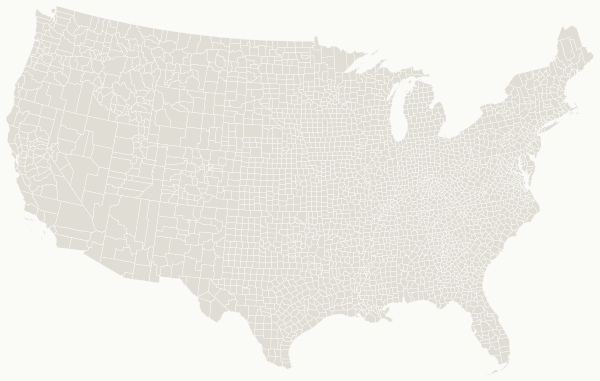
Locator map
Location within the continental US

Prepper Assessment

Living in this area offers a mix of rural and urban conveniences, with a population density of 159.8 people per square mile. The climate is generally mild, with an annual mean temperature of 60.3°F and 51.1 inches of rainfall, supporting a growing season suitable for various crops. However, the region's humid classification and USDA zone 8b indicate potential challenges with humidity and pest management during the warmer months. Water resources are plentiful, making it feasible for self-sufficient living, though careful planning is necessary for crop selection.

This county faces significant natural hazards, with ice storms, earthquakes, and tornadoes ranking as the top three risks according to FEMA data. The area's violence percentile is at 61, which may raise concerns for some individuals regarding personal safety. Additionally, while the median home price is $182,600, the cost of living can be a trade-off when considering the area's economic stability and median household income of $55,169, which may not suit everyone’s financial needs.

Craighead County may appeal to those who appreciate a mix of rural and urban lifestyles and are prepared to manage the risks associated with severe weather events. Individuals or families looking for a relatively affordable place to settle with access to basic amenities might thrive here. However, those seeking a completely remote or disaster-free environment may find the county's hazards and higher population density to be dealbreakers.

AI-generated analysis based on county data (climate, hazards, density, housing, economy). For general orientation only.

Key Facts

Ranked #2,939 nationally
Out of 3,109 CONUS counties for composite prepper suitability.
#69 of 75 in AR
Ranked #69 of 75 counties statewide for prepper suitability.
Dominant hazard: ice storm
FEMA ranks ice storm risk at 100/100 here — the leading natural threat.
Urban: 160/sqmi
Densely populated at 160 people per square mile.
Climate profile
Classified as humid with a 60.3°F annual mean and 51.1" of annual precipitation. USDA hardiness zone 8b.
Housing & taxes
Median home value $182,600.

Score Breakdown

Violence
72
percentile (lower = safer)
Disasters
92
percentile (lower = safer)
Density
79
percentile (lower = emptier)
Overall FEMA Risk
91.8
NRI composite (0-100)

Natural Hazard Profile (FEMA NRI)

Cold Wave 94
Drought 92
Earthquake 98
Hail 67
Hurricane 57
Heat Wave 95
Riverine Flood 79
Ice Storm 100
Landslide 70
Lightning 85
Strong Wind 75
Tornado 98
Wildfire 44
Winter Weather 91

Monthly Climate (1991–2020 normals)

Average temperature
JFMAMJ JASOND
Monthly precipitation (inches)
JFMAMJ JASOND
Summer high
90.5°F
Winter low
29.8°F
Heating degree days
3,511
Cooling degree days
1,846

Housing & Economy

Median home value
$182,600
Median HH income
$55,169
Price to income
3.3×
Property tax rate
0.57%
~$1,034/yr median

Community Profile

Median age
34.4
Homeownership
59.7%
Poverty rate
19.1%
Unemployment
5.9%

Connectivity

Broadband households
67.6%
No internet access
9%

Explore Craighead County Further

Similar Counties

Data sources. Prepper scores are national percentile ranks of firearm fatalities (County Health Rankings 2024 / CDC WONDER), FEMA National Risk Index 2023 composite disaster score, and population density (ACS 2022 + TIGER 2022 land area). Climate from NOAA nClimDiv 1991–2020 normals. Hardiness zone is estimated from climate data and may differ from the official USDA PHZM. Demographics and housing from Census ACS 5-year 2022. All scores are for comparison purposes only and do not constitute advice about where to live.