
Inyo County, CA
18,718 residents · 10,197 sq mi · 1.8/sq mi · 42% rural
About Inyo County
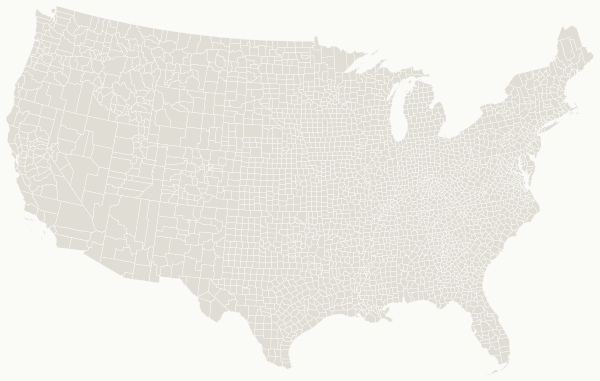
Inyo County is a county in the eastern central part of the U.S. state of California, located between the Sierra Nevada and the state of Nevada. In the 2020 census, the population was 19,016. The county seat is Independence. Inyo County is on the east side of the Sierra Nevada and southeast of Yosemite National Park in Central California. It contains the Owens River Valley; it is flanked to the west by the Sierra Nevada and to the east by the White Mountains and the Inyo Mountains. Mono County is to the north. With an area of 10,192 square miles (26,400 km2), Inyo is the second-largest county by area in California, after San Bernardino County which is directly south of Inyo County. Almost half of Inyo County's area is within Death Valley National Park. However, with a population density of 1.8 people per square mile, it also has the second-lowest population density in California, after Alpine County.
Prepper Assessment
Living in this area offers a unique experience characterized by vast, rugged terrain and a hyper-arid climate, with an annual mean temperature of 61.3°F and only 6.0 inches of rainfall per year. The growing season is limited, but USDA zone 9a provides some opportunities for hardy crops. The low population density of 1.8 people per square mile can be advantageous for those seeking solitude and space for self-sufficient living, although access to resources may require significant travel.
This county faces several natural hazards, with heat waves ranked as the most significant risk at FEMA rank 98, followed closely by avalanches and earthquakes. While the violence percentile is relatively low at 20/100, the remoteness and rural nature could pose challenges in emergency situations. The median home price of $325,900 may be a barrier for some, and the cost of living, coupled with the low effective property tax rate of 0.68%, could influence financial planning for potential residents.
This area may be suitable for experienced homesteaders or those comfortable with remote living who can adapt to the harsh climate and limited water resources. Individuals seeking a vibrant community or extensive local services might find it lacking. The dealbreaker for many could be the hyper-arid water conditions, while a hidden gem is the stunning natural beauty and low population density, ideal for those looking to escape urban life.