
Hunt & Live

Livingston County, KY

8,963 residents · 313 sq mi · 28.6/sq mi · 95% rural

Climate
57.8°F
50" rain/yr
Water
humid
Aridity index 1.76
Hardiness
Zone 8b
Winter low ~16.5°F

About Livingston County

Livingston County is a county located in the U.S. state of Kentucky. As of the 2020 census, the population was 8,888. Its county seat is Smithland and its largest community is Ledbetter. The county was established in 1798 from land taken from Christian County and is named for Robert R. Livingston, a member of the Committee of Five that drafted the U.S. Declaration of Independence. The county was strongly pro-Confederate during the American Civil War and many men volunteered for the Confederate Army. Livingston County is part of the Paducah, KY-IL Metropolitan Statistical Area. It is a prohibition or dry county with the exception of Grand Rivers which voted to allow alcohol sales in 2016.
58
Prepper Suitability
worsebetter
National rank: #1002 of 3,109
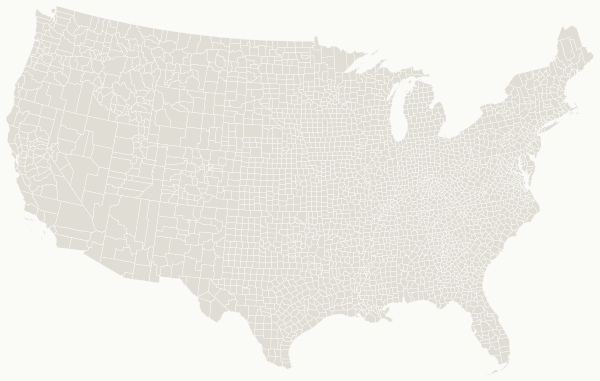
Locator map
Location within the continental US

Prepper Assessment

Livingston County features a mix of rural landscapes, with a population density of 28.6 people per square mile, allowing for ample space and privacy. The climate is characterized by an annual mean temperature of 57.8°F and 50 inches of rainfall per year, supporting a growing season suitable for various crops in USDA zone 8b. However, the area's humidity (aridity index 1.76) may present challenges for certain agricultural practices, particularly in drought conditions.

Natural hazards in this area include ice storms (FEMA rank 84) and earthquakes (rank 82), which could disrupt self-sufficient living. The county has a moderate violence percentile at 69, indicating a higher risk than many rural areas. While the median home price is relatively affordable at $108,100, the cost of living combined with potential hazards may deter some individuals seeking a stable homesteading environment.

This county may be well-suited for those who value a rural lifestyle and can manage the risks associated with natural disasters. Individuals with experience in agriculture and self-sufficiency may thrive here, especially given the affordable housing market. However, those seeking a completely safe and predictable environment, or who rely heavily on consistent broadband access (only 55% subscription), may find this area less appealing.

AI-generated analysis based on county data (climate, hazards, density, housing, economy). For general orientation only.

Key Facts

Ranked #1,196 nationally
Out of 3,109 CONUS counties for composite prepper suitability.
#25 of 120 in KY
Ranked #25 of 120 counties statewide for prepper suitability.
Dominant hazard: ice storm
FEMA ranks ice storm risk at 84/100 here — the leading natural threat.
Rural-suburban mix
28.6 people per square mile.
Climate profile
Classified as humid with a 57.8°F annual mean and 50.0" of annual precipitation. USDA hardiness zone 8b.
Housing & taxes
Median home value $108,100.

Score Breakdown

Violence
63
percentile (lower = safer)
Disasters
27
percentile (lower = safer)
Density
37
percentile (lower = emptier)
Overall FEMA Risk
27.1
NRI composite (0-100)

Natural Hazard Profile (FEMA NRI)

Cold Wave 33
Drought 69
Earthquake 82
Hail 27
Hurricane 24
Heat Wave 50
Riverine Flood 23
Ice Storm 84
Landslide 33
Lightning 25
Strong Wind 62
Tornado 49
Wildfire 7
Winter Weather 44

Monthly Climate (1991–2020 normals)

Average temperature
JFMAMJ JASOND
Monthly precipitation (inches)
JFMAMJ JASOND
Summer high
88.6°F
Winter low
26.5°F
Heating degree days
4,113
Cooling degree days
1,532

Housing & Economy

Median home value
$108,100
Median HH income
$56,125
Price to income
1.9×
Property tax rate
0.62%
~$670/yr median

Community Profile

Median age
46
Homeownership
81.9%
Poverty rate
16.8%
Unemployment
6.1%

Connectivity

Broadband households
55.4%
No internet access
14.7%

Explore Livingston County Further

Similar Counties

Data sources. Prepper scores are national percentile ranks of firearm fatalities (County Health Rankings 2024 / CDC WONDER), FEMA National Risk Index 2023 composite disaster score, and population density (ACS 2022 + TIGER 2022 land area). Climate from NOAA nClimDiv 1991–2020 normals. Hardiness zone is estimated from climate data and may differ from the official USDA PHZM. Demographics and housing from Census ACS 5-year 2022. All scores are for comparison purposes only and do not constitute advice about where to live.