
Cheboygan County, MI
25,940 residents · 715 sq mi · 36.3/sq mi · 79% rural
About Cheboygan County
Cheboygan County is a county in the U.S. state of Michigan. As of the 2020 census, the population was 25,579. The county seat is Cheboygan. The county boundaries were set off in 1840, with land partitioned from Michilimackinac County. The Cheboygan County government was organized and combined with the former Wyandot County in 1853.
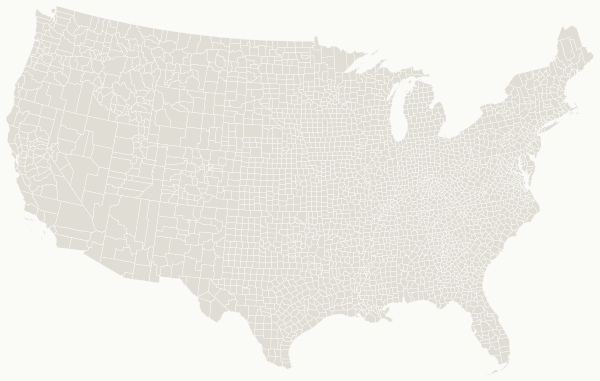
Prepper Assessment
Living in this area offers a mix of rural charm and natural resources, with a population density of 36.3 people per square mile and 79% of the land classified as rural. The climate features an annual mean of 43.7°F, with summer highs reaching 79.4°F and winter lows dropping to 10.4°F. The growing season aligns with USDA zone 7a, allowing for a variety of crops, while the humid environment, with 31.5 inches of rain per year, supports diverse vegetation and water availability for self-sufficient living.
However, there are notable risks to consider. The county has a FEMA hazard ranking of 78 for riverine flooding, indicating a significant risk of water-related issues. Other hazards include cold waves and landslides, with rankings of 70 and 67, respectively. The area has a lower violence percentile of 36/100, suggesting relative safety, but the cost of living is moderate, with a median home price of $167,400 and a median household income of $59,557, which may limit affordability for some.
This county may suit individuals or families seeking a quieter lifestyle with access to nature and agricultural potential. Those who thrive here are likely to be self-sufficient, adaptable, and prepared for the challenges of rural living. However, it may not be ideal for those requiring extensive urban amenities or who are unprepared for the risks associated with flooding and cold weather. A potential dealbreaker for homesteaders could be the risk of riverine flooding, while the area's abundant natural resources could be a hidden gem for others.