
Hunt & Live

Mackinac County, MI

10,941 residents · 1,022 sq mi · 10.7/sq mi · 75% rural

Climate
41.9°F
33.6" rain/yr
Water
humid
Aridity index 1.85
Hardiness
Zone 6b
Winter low ~-0.6°F

About Mackinac County

Mackinac County is a county in the Upper Peninsula of the U.S. state of Michigan. As of the 2020 census, the population was 10,834. The county seat is St. Ignace. Formerly known as Michilimackinac County, in 1818 it was one of the first counties of the Michigan Territory, as it had long been a center of French and British colonial fur trading, a Catholic church and Protestant mission, and associated settlement. The county's name is shortened from "Michilimackinac", which referred to the Straits of Mackinac area as well as the French settlement at the tip of the lower peninsula. Mackinac County is one of two U.S. counties to feature shorelines on two Great Lakes, being Lake Huron and Lake Michigan.
79
Prepper Suitability
worsebetter
National rank: #234 of 3,109
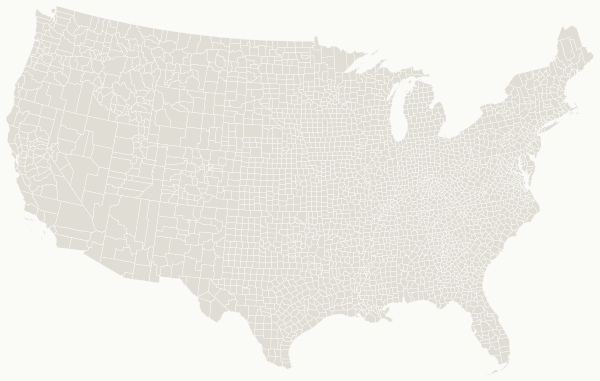
Locator map
Location within the continental US

Prepper Assessment

Living in this area offers a mix of rural charm and natural beauty, with a population density of just 10.7 people per square mile. The climate features an annual mean temperature of 41.9°F and a growing season that is moderate, categorized as USDA zone 6b. With 33.6 inches of annual rainfall, the region supports diverse agriculture, though the colder winters, with lows averaging 9.4°F, may limit year-round growing options. Access to water is adequate, given the humid classification.

Natural hazards pose some risk, with landslide and wildfire ranked 53 and 48 respectively on the FEMA scale, indicating a moderate concern. Cold waves and coastal flooding can also occur, with ranks of 43 and 37. The area has relatively low violence, scoring in the 31st percentile, suggesting it is generally a safer place. However, the cost of living is moderate, with median home prices around $157,000 and property taxes at 1.06%, which could be a consideration for potential residents.

This county may suit those seeking a quieter, rural lifestyle with access to outdoor activities and a tight-knit community. It is a good fit for individuals or families who can adapt to colder climates and prefer self-sufficient living. However, those reliant on extensive broadband connectivity may find the 49% subscription rate limiting. Additionally, the potential for natural hazards should be carefully considered by anyone looking to establish a homestead in the area.

AI-generated analysis based on county data (climate, hazards, density, housing, economy). For general orientation only.

Key Facts

Top 4% nationally
National prepper rank: #118 of 3,109.
#7 of 83 in MI
Ranked #7 of 83 counties statewide for prepper suitability.
Dominant hazard: landslide
FEMA ranks landslide risk at 53/100 here — the leading natural threat.
Sparse population
10.7 people per square mile — well below the CONUS average.
Climate profile
Classified as humid with a 41.9°F annual mean and 33.6" of annual precipitation. USDA hardiness zone 6b.
Housing & taxes
Median home value $157,000.

Score Breakdown

Violence
35
percentile (lower = safer)
Disasters
9
percentile (lower = safer)
Density
19
percentile (lower = emptier)
Overall FEMA Risk
9.1
NRI composite (0-100)

Natural Hazard Profile (FEMA NRI)

Coastal Flood 37
Cold Wave 43
Earthquake 6
Hail 13
Hurricane 15
Heat Wave 4
Riverine Flood 30
Ice Storm 3
Landslide 53
Lightning 32
Strong Wind 6
Tornado 9
Wildfire 48
Winter Weather 15

Monthly Climate (1991–2020 normals)

Average temperature
JFMAMJ JASOND
Monthly precipitation (inches)
JFMAMJ JASOND
Summer high
76.1°F
Winter low
9.4°F
Heating degree days
8,577
Cooling degree days
206

Housing & Economy

Median home value
$157,000
Median HH income
$60,620
Price to income
2.6×
Property tax rate
1.06%
~$1,671/yr median

Community Profile

Median age
52.7
Homeownership
76%
Poverty rate
15.8%
Unemployment
10%

Connectivity

Broadband households
48.9%
No internet access
15.7%

Explore Mackinac County Further

Similar Counties

Data sources. Prepper scores are national percentile ranks of firearm fatalities (County Health Rankings 2024 / CDC WONDER), FEMA National Risk Index 2023 composite disaster score, and population density (ACS 2022 + TIGER 2022 land area). Climate from NOAA nClimDiv 1991–2020 normals. Hardiness zone is estimated from climate data and may differ from the official USDA PHZM. Demographics and housing from Census ACS 5-year 2022. All scores are for comparison purposes only and do not constitute advice about where to live.