
Hunt & Live

Banner County, NE

660 residents · 746 sq mi · 0.9/sq mi · 100% rural

Climate
48.1°F
17.6" rain/yr
Water
dry sub-humid
Aridity index 0.84
Hardiness
Zone 7b
Winter low ~6.1°F

About Banner County

Banner County is a county in the western part of the U.S. state of Nebraska in the Great Plains region of the United States. As of the 2020 census, its population was 674, and was estimated to be 665 in 2024. The county seat and the largest community is the unincorporated community of Harrisburg; there are no incorporated municipalities within the county. Banner County is part of the Scottsbluff, NE micropolitan area.
94
Prepper Suitability
worsebetter
National rank: #14 of 3,109
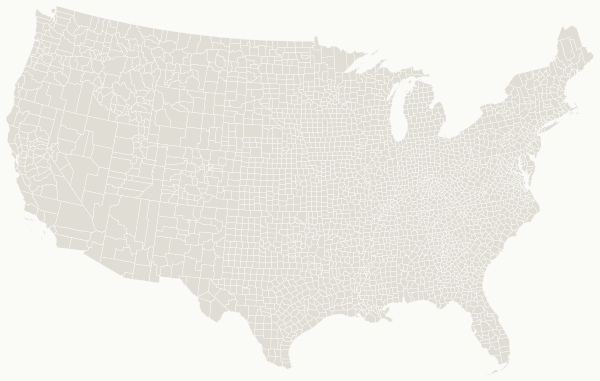
Locator map
Location within the continental US

Prepper Assessment

Living in this area offers a predominantly rural lifestyle with a low population density of 0.9 people per square mile. The climate features an annual mean temperature of 48.1°F, with a growing season suitable for USDA zone 7b. Rainfall averages 17.6 inches per year, providing moderate moisture, although the region is classified as dry sub-humid. The landscape is typical of the Great Plains, which allows for a range of agricultural activities but may limit certain types of crops due to the aridity index of 0.84.

The area does present some risks, particularly related to drought, which ranks 67 on the FEMA hazard scale, indicating a significant concern for water availability. Other notable hazards include hail and wildfire, with respective rankings of 50 and 42. The violence percentile of 24 suggests a relatively safe environment, while the cost of living is moderated by housing prices, with a median home value of $174,200. However, only 37% of households have broadband access, which may limit connectivity for some residents.

This county is well-suited for those seeking a quiet, rural lifestyle with opportunities for self-sufficiency, particularly in agriculture. It may appeal to individuals or families looking for a low-cost living environment and a strong sense of community. However, those who rely heavily on digital connectivity or are concerned about water scarcity might find it less accommodating. The hidden gem here is the low population density, which offers ample space for homesteading and privacy.

AI-generated analysis based on county data (climate, hazards, density, housing, economy). For general orientation only.

Key Facts

Top 10 nationally
Ranks #10 of 3,109 CONUS counties for prepper suitability — top 0%.
#8 of 93 in NE
Ranked #8 of 93 counties statewide for prepper suitability.
Dominant hazard: drought
FEMA ranks drought risk at 67/100 here — the leading natural threat.
Extremely rural
Only 0.9 people per square mile — fewer than 5/sqmi places you in the bottom 5% nationally for density.
Climate profile
Classified as dry sub-humid with a 48.1°F annual mean and 17.6" of annual precipitation. USDA hardiness zone 7b.
Housing & taxes
Median home value $174,200.

Score Breakdown

Violence
17
percentile (lower = safer)
Disasters
1
percentile (lower = safer)
Density
1
percentile (lower = emptier)
Overall FEMA Risk
0.8
NRI composite (0-100)

Natural Hazard Profile (FEMA NRI)

Cold Wave 13
Drought 67
Earthquake 3
Hail 50
Heat Wave 3
Riverine Flood 1
Ice Storm 12
Landslide 6
Lightning 1
Strong Wind 6
Tornado 8
Wildfire 42
Winter Weather 10

Monthly Climate (1991–2020 normals)

Average temperature
JFMAMJ JASOND
Monthly precipitation (inches)
JFMAMJ JASOND
Summer high
87.6°F
Winter low
16.1°F
Heating degree days
6,684
Cooling degree days
573

Housing & Economy

Median home value
$174,200
Median HH income
$62,375
Price to income
2.8×
Property tax rate
1.07%
~$1,864/yr median

Community Profile

Median age
54.1
Homeownership
69.5%
Poverty rate
7.4%
Unemployment
3.3%

Connectivity

Broadband households
36.9%
No internet access
22.9%

Explore Banner County Further

Similar Counties

Data sources. Prepper scores are national percentile ranks of firearm fatalities (County Health Rankings 2024 / CDC WONDER), FEMA National Risk Index 2023 composite disaster score, and population density (ACS 2022 + TIGER 2022 land area). Climate from NOAA nClimDiv 1991–2020 normals. Hardiness zone is estimated from climate data and may differ from the official USDA PHZM. Demographics and housing from Census ACS 5-year 2022. All scores are for comparison purposes only and do not constitute advice about where to live.