
Ottawa County, OK
30,338 residents · 471 sq mi · 64.4/sq mi · 49% rural
About Ottawa County
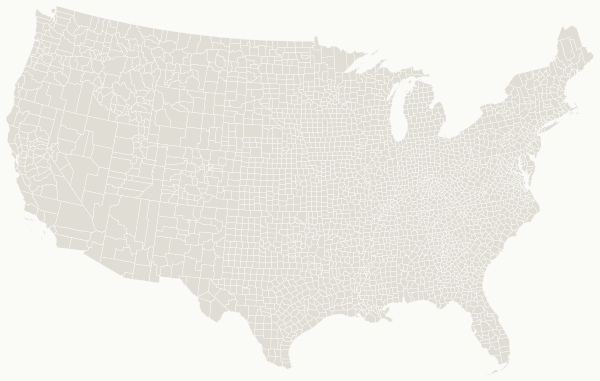
Ottawa County is a county located in the northeastern corner of the U.S. state of Oklahoma. As of the 2020 census, the population was 30,285. Its county seat is Miami. The county was named for the Ottawa Tribe of Oklahoma. It is also the location of the federally recognized Modoc Nation and the Quapaw Nation, which is based in Quapaw. Ottawa County comprises the Miami micropolitan statistical area, which is included in the Joplin-Miami, MO-OK combined statistical area. The county borders both Kansas and Missouri. The county was an important lead and zinc mining region during the early 1900s, and in 1983, the Tar Creek Superfund site was inaugurated to clean up tailings and prevent groundwater and waterway contamination with leachates.
Prepper Assessment
This area features a mix of rural and urban settings, with a population density of 64.4 people per square mile, which offers a balance of community and open space. The climate is humid, with an annual mean temperature of 58.8°F and 45.9 inches of rainfall per year, supporting a growing season suitable for various crops. The USDA zone 8b indicates that gardeners can cultivate a wide range of plants, but the potential for drought and extreme heat may limit certain agricultural practices.
Natural hazards pose significant risks, with the county facing a high likelihood of ice storms (FEMA rank 99) and drought (rank 97), which can impact water availability and agricultural output. Strong winds (rank 91) and heat waves (rank 86) add to the environmental challenges. Additionally, the area has a relatively high violence percentile of 82/100, which may be a concern for those seeking a peaceful homesteading environment. The cost of living is moderate, with median home prices at $107,500 and a low property tax rate of 0.62%.
This county may suit individuals or families looking for an affordable place to settle with a focus on self-sufficiency and farming, particularly those comfortable with the risks of natural hazards. However, it may not be ideal for those seeking a completely safe and quiet retreat, as the high violence percentile and potential for severe weather could be dealbreakers. Homesteaders with resilience and adaptability to the climate and environmental challenges may find hidden gems in the fertile land and community resources.