
Arlington County, VA
234,000 residents · 26 sq mi · 9,000.9/sq mi
About Arlington County
Arlington County, or simply Arlington, is a county in the U.S. state of Virginia. The county, which is located in the Washington metropolitan area and the broader Northern Virginia region, is positioned directly across the Potomac River from Washington, D.C., the national capital, on the river's southwestern bank. The smallest self-governing county in the United States by area, Arlington County has both suburban and urbanized districts. Its urban areas are located in proximity to several Washington Metro stations and lines. Arlington's seat of government is located in the Court House neighborhood, which hosts many of its administrative offices and the county courthouse.
Prepper Assessment
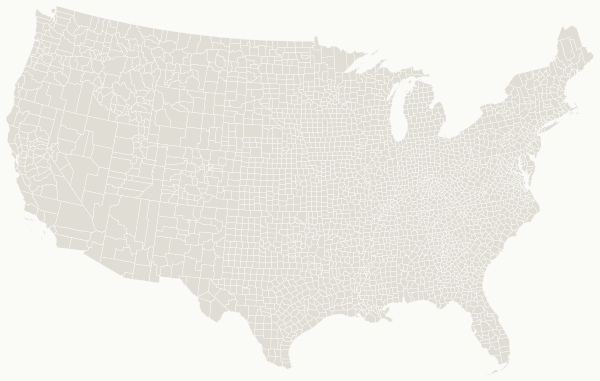
Living in this area presents a blend of urban and suburban environments, characterized by a high population density of 9,000.9 people per square mile. The climate is humid with an annual mean temperature of 56.6°F and 44.4 inches of rainfall, supporting a growing season suitable for USDA zone 8b. However, the lack of rural land limits opportunities for large-scale self-sufficient living, as the county is entirely urbanized with no rural zones available for traditional homesteading activities.
The risks in this area include a range of natural hazards, notably heat waves (FEMA rank 90) and winter weather (rank 84), which could impact daily life and preparedness efforts. Despite a low violence percentile of 0, the high population density may contribute to competition for resources and space. Additionally, the median home price of $833,300 poses a significant barrier to entry for potential homesteaders, limiting affordability and access to land.
This county may suit individuals seeking urban conveniences with some suburban benefits, particularly those who prioritize access to amenities and job opportunities in a metropolitan area. However, traditional homesteaders or those focused on self-sufficiency may find the lack of rural space and high housing costs prohibitive. The hidden gem here is the broadband access in 86% of households, which could support remote work or online businesses, but the overall environment is not conducive for those seeking a more isolated, self-sufficient lifestyle.