
Hunt & Live

Bristol County, VA

16,975 residents · 13 sq mi · 1,318.8/sq mi · 1% rural

Climate
55.9°F
46.5" rain/yr
Water
humid
Aridity index 1.77
Hardiness
Zone 8b
Winter low ~16°F

About Bristol County

Bristol is an independent city in Virginia, United States. As of the 2020 census, the population was 17,219. It is the twin city of Bristol, Tennessee, just across the state line, which runs down the middle of its main street, State Street. As an independent city, Bristol is not part of any county, but it is adjacent to Washington County, Virginia. It is a principal city in the Kingsport–Bristol metropolitan area, which had a population of 307,614 in 2020. The metro area is a component of the larger Tri-Cities region of Tennessee and Virginia, with a population of 508,260 in 2020.
42
Prepper Suitability
worsebetter
National rank: #2087 of 3,109
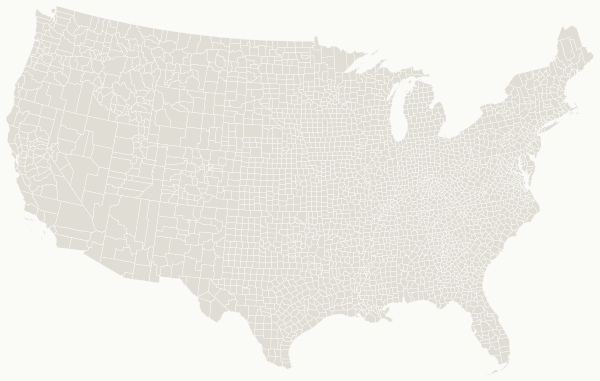
Locator map
Location within the continental US

Prepper Assessment

Living in this area features a humid climate with an annual mean temperature of 55.9°F and an average of 46.5 inches of rainfall per year, supporting a growing season suitable for a variety of crops. The terrain is relatively urbanized, with a population density of 1,318.8 people per square mile, which limits the potential for traditional homesteading. However, the USDA zone 8b allows for a diverse range of plants, making gardening feasible for self-sufficiency.

This area faces significant risks, particularly from earthquakes (FEMA rank 60) and landslides (FEMA rank 45), which could pose challenges for long-term stability. Additionally, the population density percentile of 96/100 indicates a crowded environment, which could lead to increased competition for resources and potential social tensions. The median home price of $154,900 is relatively affordable, but the high density may deter those seeking a more rural, peaceful lifestyle.

This county may be suitable for individuals or families looking for affordable housing and access to urban amenities, but it may not be ideal for those seeking a remote, self-sufficient homesteading experience. The risks associated with natural disasters could be a dealbreaker for some preppers, while those comfortable with a more populated environment may find value in the area's resources and community. Overall, it is better suited for urban homesteaders rather than traditional rural preppers.

AI-generated analysis based on county data (climate, hazards, density, housing, economy). For general orientation only.

Key Facts

Ranked #1,776 nationally
Out of 3,109 CONUS counties for composite prepper suitability.
#81 of 133 in VA
Ranked #81 of 133 counties statewide for prepper suitability.
Dominant hazard: earthquake
FEMA ranks earthquake risk at 60/100 here — the leading natural threat.
Urban: 1,319/sqmi
Densely populated at 1,319 people per square mile.
Climate profile
Classified as humid with a 55.9°F annual mean and 46.5" of annual precipitation. USDA hardiness zone 8b.
Housing & taxes
Median home value $154,900.

Score Breakdown

Violence
70
percentile (lower = safer)
Disasters
8
percentile (lower = safer)
Density
96
percentile (lower = emptier)
Overall FEMA Risk
8.6
NRI composite (0-100)

Natural Hazard Profile (FEMA NRI)

Cold Wave 27
Earthquake 60
Hail 9
Hurricane 33
Riverine Flood 23
Ice Storm 9
Landslide 45
Lightning 36
Strong Wind 41
Tornado 17
Wildfire 1
Winter Weather 20

Monthly Climate (1991–2020 normals)

Average temperature
JFMAMJ JASOND
Monthly precipitation (inches)
JFMAMJ JASOND
Summer high
85.3°F
Winter low
26°F
Heating degree days
4,263
Cooling degree days
976

Housing & Economy

Median home value
$154,900
Median HH income
$45,250
Price to income
3.4×
Property tax rate
0.81%
~$1,250/yr median

Community Profile

Median age
43.7
Homeownership
63%
Poverty rate
17%
Unemployment
4.1%

Connectivity

Broadband households
66.9%
No internet access
20%

Explore Bristol County Further

Similar Counties

Data sources. Prepper scores are national percentile ranks of firearm fatalities (County Health Rankings 2024 / CDC WONDER), FEMA National Risk Index 2023 composite disaster score, and population density (ACS 2022 + TIGER 2022 land area). Climate from NOAA nClimDiv 1991–2020 normals. Hardiness zone is estimated from climate data and may differ from the official USDA PHZM. Demographics and housing from Census ACS 5-year 2022. All scores are for comparison purposes only and do not constitute advice about where to live.