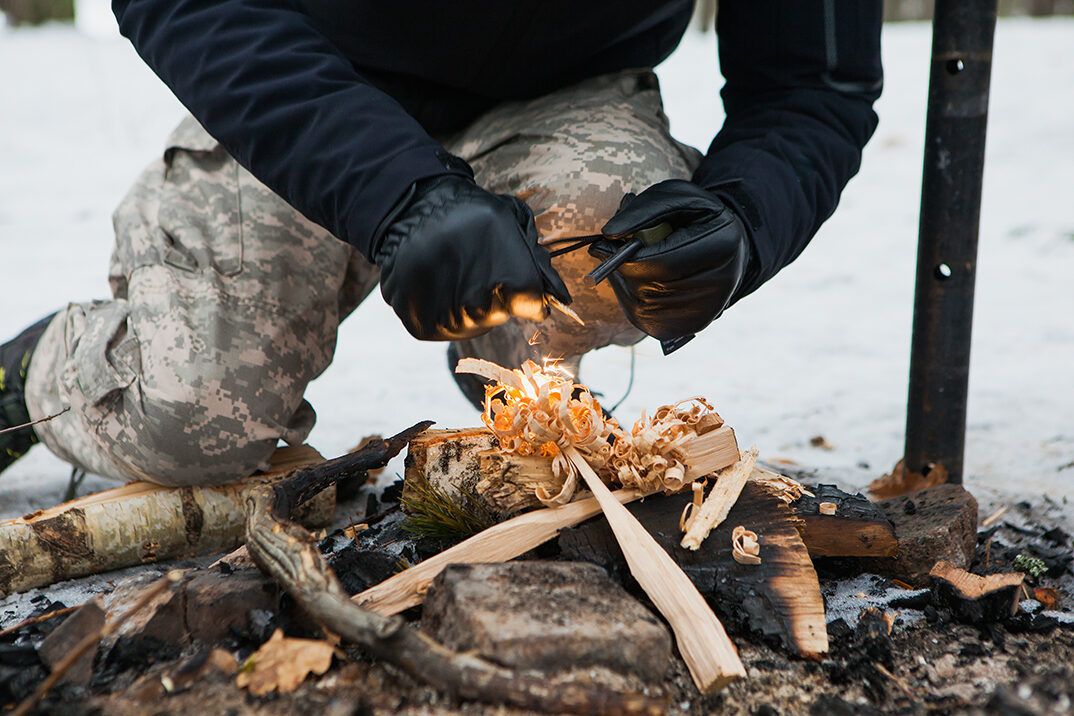
03 — Pillar · Survival
Expert guides and Q&A about fire hand drill.
Q&A in this topic
60 total
Yes, there are regulations on fire starting in the wilderness, particularly in national parks and forests, to prevent wildfires and protect the environment. The
The best conditions for practicing a hand drill fire are in a dry, windless environment with temperatures between 40°F and 80°F (4°C and 27°C), and a relative h
The best locations for gathering fire starting materials include areas with high tree density, aspen groves, and near water sources. Dry leaves, pine needles, a
Practice friction fire techniques in dry, well-drained environments with abundant tinder and kindling, such as forests, grasslands, or rocky outcrops. Look for
To create a fire board, use a flat piece of wood, ideally with a thickness of 1-2 inches, and a length of 6-12 inches, with a notch cut in the center, about 1 i
Store fire starting materials in airtight containers to protect them from moisture and extreme temperatures. Choose containers with easy-to-open lids and consid
To transition to advanced fire skills, practice consistently with a focus on developing your hand drill technique, using materials such as wood and bamboo. Star
The best surface to create friction fire is a piece of hardwood, such as ash, beech, or birch, with a straight grain and a smooth, flat surface. This type of wo
Embedding a fire hand drill involves creating a series of 360-degree V-shaped notches in a piece of tinder, allowing for efficient fire starter setup. The notch
To ensure fireboard stability, focus on creating a flat surface, securing the board with rocks or logs, and using a steady hand to drill. This will prevent the
The best time for practicing fire techniques is during the early morning or late afternoon when the sun is not too harsh, allowing for better visibility and con
To maintain friction fire tools, apply a thin layer of beeswax or plant resin to the drill and board, and regularly inspect for wear and tear. Replace worn dril
To gather tinder for a friction fire, focus on collecting dry, fluffy materials such as dry leaves, grass, moss, and small twigs. Look for areas with low vegeta
The best wind conditions for practicing friction fire are light breezes of 2-5 mph, which allow for a stable ember formation without extinguishing the fire.
For a successful hand drill fire, choose woods with high energy content, such as hardwoods like oak, ash, and beech, and softwoods like pine and cedar. These wo
Certain oils can improve hand drill efficiency by reducing friction and preventing splintering of the drill surface.
Cured wood can improve friction fire success rates due to its increased hardness and density, allowing for a more efficient transfer of heat and creating a more
Fire can be reliably created with modern gear, emulating the fire-by-friction method. A metal match case or a firesteel can produce sparks to ignite tinder. The
Scraps from other crafts can be used for fire making, but it's crucial to identify materials that are dry, tinder-like, and will catch a spark easily.
Incorporating modern materials into traditional fire practices can enhance efficiency and effectiveness, but it's essential to maintain the core principles and
Wet conditions do not completely eliminate the possibility of starting a fire, but they do make it significantly more challenging. A fire can still be started,
Starting a fire at night is challenging but not impossible. With the right techniques and tools, you can successfully start a fire even in the dark. A reliable
While friction fire techniques such as the hand drill can be used in urban areas, finding suitable materials and maintaining stealth may be challenging due to h
Teaching fire making skills to children can be a valuable and rewarding experience, helping them develop essential survival skills and build confidence in their
Birch bark can be used as tinder successfully, but it requires careful preparation to ignite easily and burn well.
You can use deadwood from deciduous trees for fire, but it may not be the best option due to its higher moisture content.
Old timber can be used for fire starting, but it's essential to use the right type of wood and to properly prepare it to create a successful fire. When using ol
Palm fronds can be used for creating a makeshift hand drill or as a tinder aid when starting a fire. However, they are not the most ideal material for creating
Pine can be used for friction fire techniques, but it's not the most ideal choice due to its soft and fibrous nature, which can lead to inconsistent results.
Softwoods are not the preferred choice for ancestral fire methods due to their high moisture content and difficulty in igniting, making it challenging to achiev
Synthetic materials can be used in fire starting, but they are not as reliable or sustainable as natural materials like wood or bamboo.
Starting a fire in high humidity can be challenging due to the difficulty in generating sufficient heat and sustaining a flame. Excess moisture in the air makes
Common Misconceptions About Ancestral Fire Techniques is that many people believe fire can be easily started with just any piece of wood or a handful of dry lea
Common Mistakes When Using A Hand Drill: Using a hand drill incorrectly can lead to frustration, wasted time, and failed fire starting. Many users apply too muc
Certain tree species, such as cattail, clematis, and cedar, burn better as tinder due to high resin content and low moisture levels.
Different regions have developed unique fire making traditions, often influenced by local materials and environmental conditions. For example, in the Pacific No
Local regulations Impact fire starting activities, with restrictions on campfires, firewood collection, and fire containment, varying by region, season, and jur
Elevation impacts fire drill performance due to decreased oxygen levels and increased air density. This affects the drill's speed, efficiency, and overall effec
Friction fire requires specific techniques and hand positioning, but does not necessitate 'special skills'. Anyone with basic hand-eye coordination and a willin
Temperature affects fire starting success by impacting the efficiency of tools and techniques. Cold temperatures make it more difficult to start fires, while wa
Wind Affects The Hand Drill Fire Technique because it can disrupt the rotation and speed of the drill, making it difficult to generate sufficient heat to ignite
Wood Moisture Content Affects Ignition Time significantly as it impacts the wood's ability to catch fire and sustain flames. Wood with high moisture content is
Dry Grass Or Bark — Which Ignites Better
Look for straight, hard, and dense wood species like hickory, ash, or locust to create a proper spindle for a fire hand drill.
Elevations above 5,000 feet significantly impact fire techniques due to reduced oxygen levels and increased wind resistance. Fire starting methods such as bow d
Fire lay patterns significantly impact heat output by altering airflow, fuel combustion, and heat retention. An efficient fire lay can increase heat output by u
Mastering a hand drill fire takes 1-3 months of consistent practice, with a minimum of 30 minutes of practice per day, 3-4 times a week.
A fireboard should be at least 6 inches (15 centimeters) long and 2-3 inches (5-7.5 centimeters) wide for successful fire starting with a hand drill.
With the right technique and materials, it should take around 5-15 attempts to start a fire using a traditional hand drill method.
Expect 3-5 successful ignition attempts when using a fire hand drill, assuming proper technique and environmental conditions. This can vary depending on the use
A fire hand drill can be used around 50 to 100 times before showing significant wear and tear, depending on usage and maintenance. However, it's recommended to
You should practice friction fire skills at least once a week, ideally 2-3 times a month, to maintain muscle memory and proficiency. This frequency will help yo
A fire drill is ready when it has a bed of coals, a steady flame, and is producing a moderate amount of smoke. This typically takes about 5-7 minutes of continu
A hand drill spindle diameter of 1/4 inch (6.35 mm) or 3/8 inch (9.525 mm) is ideal for hand drill spindles used in fire starting techniques.
Ideal fire drill materials for backpacking include a straight branch (approximately 1-2 inches in diameter and 6-8 inches long for the drill), a piece of string
A hand drill spindle should be between 1/4 and 3/8 of an inch (6-10 mm) in diameter and 6-8 inches (15-20 cm) long for optimal efficiency and durability.
A single stick is not enough for making a successful ancestral fire by hand drill, requiring at least two sticks, one for the drill and the other for the firebo
ASH WOOD IS SUITABLE FOR FIRE STARTING PROJECTS DUE TO ITS LOW MOISTURE CONTENT AND HIGH HEAT PRODUCTION, MAKING IT A POPULAR CHOICE FOR FIRE HAND DRILLS AND OT
Bamboo is not the most ideal material for friction fire due to its relatively low friction coefficient, but with proper preparation, it can still be used.
Cottonwood is a decent fire starter for a hand drill, but its sap and moisture content can hinder ignition.