03 — Pillar · Survival
Expert guides and Q&A about fire magnifying glass.
Q&A in this topic
60 total
Making fire outdoors raises ethical considerations related to fire safety, environmental impact, and respect for private property and public lands.
Yes, there are legal restrictions when using solar methods, particularly when using a fire magnifying glass to ignite fires in certain areas.
There are several myths surrounding solar fire ignition, including the idea that only high-quality magnifying glasses can start fires and that it requires direc
Using lenses for ignition requires caution to avoid accidents and burns; always use a protective shield or barrier between the lens and the flame, and never foc
Using a Fresnel lens for ignition poses risks of burns, fires, and eye damage due to concentrated sunlight and potential misdirection of the concentrated beam.
Yes, there are specific techniques for using lenses in windy conditions, such as adjusting the angle of incidence and using a lens hood to minimize distortion a
Yes, certain times of day are more suitable for solar ignition due to the sun's position and intensity, but generally, mid-morning to early afternoon is conside
The best locations to start a fire using solar ignition are areas with direct sunlight, minimal obstructions, and a clear horizon. A south-facing slope with a f
Look for dry, flexible, and straight branches of fir, pine, or cedar trees, typically 1-3 inches in diameter, with a length of 6-12 inches. These can be easily
Position a lens to ignite tinder by focusing sunlight onto a small area, using a 5-10x magnification, and adjusting the angle to achieve a hot spot.
The best types of tinder for solar ignition techniques are dry, fluffy materials like dry leaves, grass, and small twigs, which can be easily ignited with a mag
For optimal fire starting in survival situations, it's essential to carry gear safely and efficiently. A well-organized carry system is crucial for quick access
A magnifying lens can indeed ignite tinder in low light conditions, provided the conditions are right and the technique is applied correctly. The lens should be
Different types of solar lenses can offer unique advantages, particularly in terms of their ability to concentrate sunlight and ignite fires. These lenses can b
Fire starting techniques can vary by region due to differences in available materials, climate, and vegetation, requiring adaptability and knowledge of local re
Fresnel lenses can be used effectively in survival kits as a fire starting tool, especially in conjunction with a magnifying glass.
High humidity can significantly reduce the effectiveness of solar ignition, even with a high-quality fire magnifying glass.
Yes, you can create a reflective surface to aid fire starting, often referred to as a fire magnifying glass, by using a clear plastic water bottle, a piece of g
A Fresnel lens can be used to focus sunlight onto a small area, generating heat and potentially starting a fire. However, using a Fresnel lens indoors to start
A magnifying glass can be used as an improvised lens for ignition, but it's not the most efficient option. Its ability to focus sunlight onto a small area is li
READING GLASSES AS A MAGNIFYING TOOL FOR FIRE: IT'S POSSIBLE BUT LIMITED. THEY MIGHT WORK IN A PINCH, BUT A PROPER MIRROR OR LENSES ARE DESIGNED FOR FIRE STARTI
Yes, you can use your smartphone lens for fire starting, but its effectiveness depends on the quality of the lens and the ambient conditions.
Yes, leaf litter can be used as tinder when focused with a Fresnel lens, but you may need to dry it first to achieve successful ignition.
Magnifying lenses can work on wet tinder, but they may not be as effective as they would be on dry tinder. This is because the water on the tinder can make it d
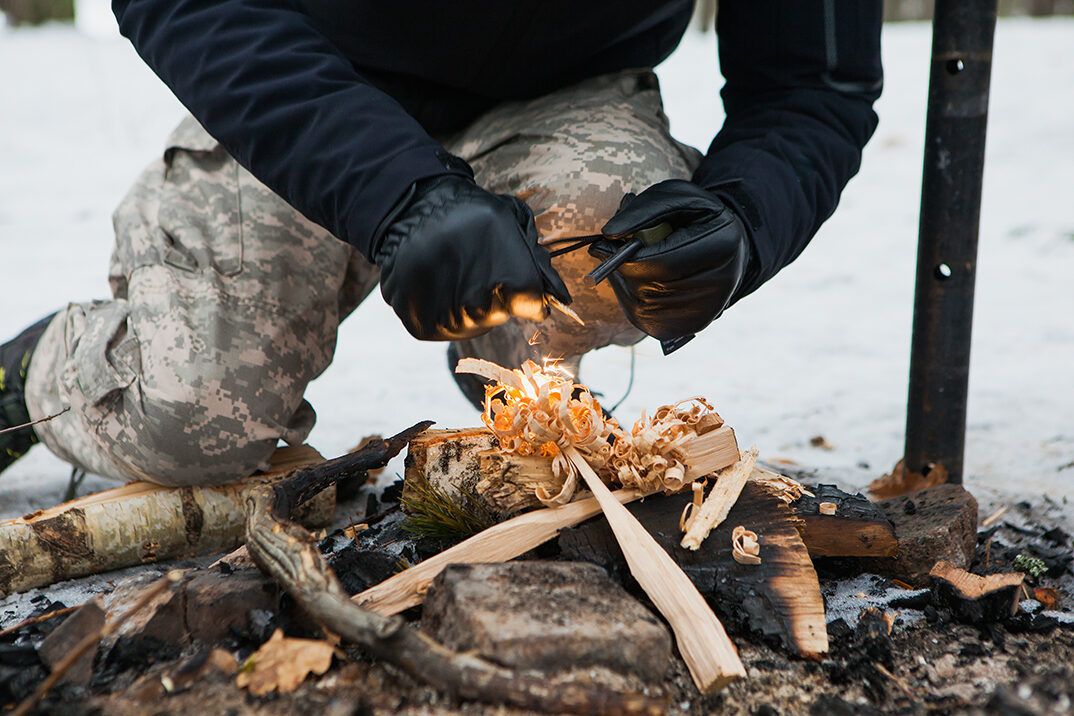
Yes, sunlight can ignite tinder on snowy surfaces, but it requires a magnifying glass or a clear, unobstructed focal point to concentrate the sun's rays onto a
Yes, sunlight refraction can cause accidental fires, particularly when focusing sunlight onto flammable materials using a magnifying glass or other optical tool
Surviving off-grid can greatly benefit from solar fire-making techniques, including the use of magnifying glasses to start fires using sunlight. This method can
Yes, a Fresnel lens can create fire in winter with the right technique and materials.
You can make your own Fresnel lens for survival situations using a few simple materials, including a plastic sheet, a hot knife or a craft knife, and a metal ru
STARTING A FIRE WITH A BROKEN MAGNIFYING LENS IS POSSIBLE BUT CHALLENGING, REQUIRING A LARGE ENOUGH PIECE AND DIRECT SUNLIGHT.
You can start a fire with surfaces reflecting sunlight by using a magnifying glass, a shiny surface, or even a piece of broken glass.
A compact Fresnel lens can be used as a makeshift fire magnifying glass for backpacking, as it can focus sunlight onto a small area to start fires with minimal
A Fresnel lens can be used as a makeshift cooking tool outdoors, but its effectiveness depends on the material, size, and quality of the lens. A high-quality Fr
Yes, you can use a smartphone camera lens for fire starting, but it requires some preparation and technique.
A UV filter cannot be used as a magnifying lens for fire due to its material properties and design limitations.
Using both a Fresnel lens and tinder together can be a highly effective method for igniting fires in a survival situation.
Glass lenses can be used for fire starting in emergency situations, but they require proper preparation and technique to focus the sun's rays effectively.
Two lenses can be used in conjunction to increase fire starting efficiency, but it requires a specific setup and technique. By combining two convex lenses, one
Young children can safely use magnifying lenses for fire starting with adult supervision, but they must be taught proper technique and safety precautions.
Different types of tinder can significantly affect ignition times, with dry, fluffy materials like cattail fluff igniting in as little as 30 seconds, while damp
Lenses can work effectively at altitude for ignition under ideal conditions. However, the effectiveness decreases as altitude increases, due to the reduced atmo
The color of tinder plays a critical role in solar ignition, as certain colors can absorb and focus sunlight more effectively than others, increasing the chance
Focusing sunlight on tinder requires constant adjustment to maintain a stable, concentrated beam.
The distance from the tinder significantly impacts the ignition success rate when using a fire magnifying glass. A distance of 1-2 inches (2.5-5 cm) typically y
Using lenses to focus sunlight, such as a fire magnifying glass, does not require special skills or knowledge, but rather basic understanding of optics and prac
Wind Affects the Effectiveness of Sun Ignition Techniques due to reduced concentration and increased heat dissipation, making it challenging to focus solar ener
Fresnel lens is generally more portable than a magnifying lens due to its thinner, more compact design.
Improving your fire starting skills with lenses can be achieved through practice, proper technique, and choosing the right materials. A magnifying glass or othe
Short Answer: To practice solar ignition techniques safely, start with a magnifying glass or a clear plastic water bottle to focus sunlight, and begin with smal
Different angles of sunlight can significantly affect the ignition of tinder, with optimal angles ranging between 45-60 degrees for maximum intensity. At these
The angle of sunlight affects a Fresnel lens's performance by altering the focal length and intensity of the concentrated beam. A Fresnel lens performs optimall
The shape of a lens affects its ability to start fires by focusing sunlight onto a specific area, concentrating heat and energy. A well-crafted lens with the ri
Lens thickness affects the fire starting ability of a magnifying glass by influencing its ability to focus sunlight into a hot spot.
Acquiring basic solar ignition skills with a fire magnifying glass can take 1-3 months of consistent practice, with 2-4 hours of focused training per week. This
Focus sunlight on tinder for 30 to 60 seconds to ignite, and then gently blow to sustain the flame. Adjust the angle and distance for optimal results. Practice
Try igniting a tinder stick 5-7 times. If it fails to ignite, switch to a new tinder material. Repeating the attempt too many times can cause the tinder to dete
With a clear magnifying glass or a well-designed lens, you can start a fire within 5-15 minutes, assuming optimal conditions, proper technique, and a piece of t
Clean a Fresnel lens by gently wiping it with a soft cloth and mild soap, then rinsing with distilled water and allowing it to air dry. Use a 50/50 water and wh
Combining different types of tinder can significantly improve ignition results, as it creates a hot, smoky bed of coals that helps to sustain a flame. Using the
Inspect a Fresnel lens for damage before use by checking for cracks, chips, or discoloration. Look for any signs of damage on both the lens surface and its edge