03 — Pillar · Survival
Expert guides and Q&A about fire one match challenge.
Q&A in this topic
60 total
Making one-match fires can raise concerns about the efficient use of resources and potentially wasting matches, which may be scarce in survival situations.
Yes, specific regulations on building fires in national parks vary by location but generally prohibit fires in sensitive areas, restrict fire size, and require
In the wilderness, look for dry, fluffy materials like pine needles, grasses, and small twigs to create natural tinder. Dry leaves, moss, and lichen also work w
To protect tinder from rain before lighting, use a waterproof container or a windproof match case, and create a dry shelter by placing a plastic bag or a tarp a
For efficient one-match fires, the best natural tinder sources are dry, fluffy, and highly combustible materials like dry pine needles, shredded bark, and dried
To extinguish a one-match fire safely, smother it with the recommended 4.5 inches of sand or 8 inches of soil, ensuring the fuel source is deprived of oxygen. N
To minimize smoke in a one-match fire, focus on creating a small, efficient flame and use a tinder material that burns rapidly and with minimal smoke. This can
In a wet environment, the best techniques for gathering tinder involve identifying dry, protected areas and using specific tools to collect and prepare small, d
In windy environments, preserving a flame requires a combination of windscreening, fuel replenishment, and adjustment of the fire pit to reduce airflow. Using n
The best time of day for practicing one-match fire skills is early morning or late afternoon when humidity is relatively low and wind is minimal, typically betw
Teach kids the One-Match Fire Technique by starting with a simple fire pit, explaining the concept of heat retention and transfer, and gradually increasing diff
Teach beginners survival skills by emphasizing hands-on practice, focusing on basic needs like shelter, fire, and water, and encouraging questions and experimen
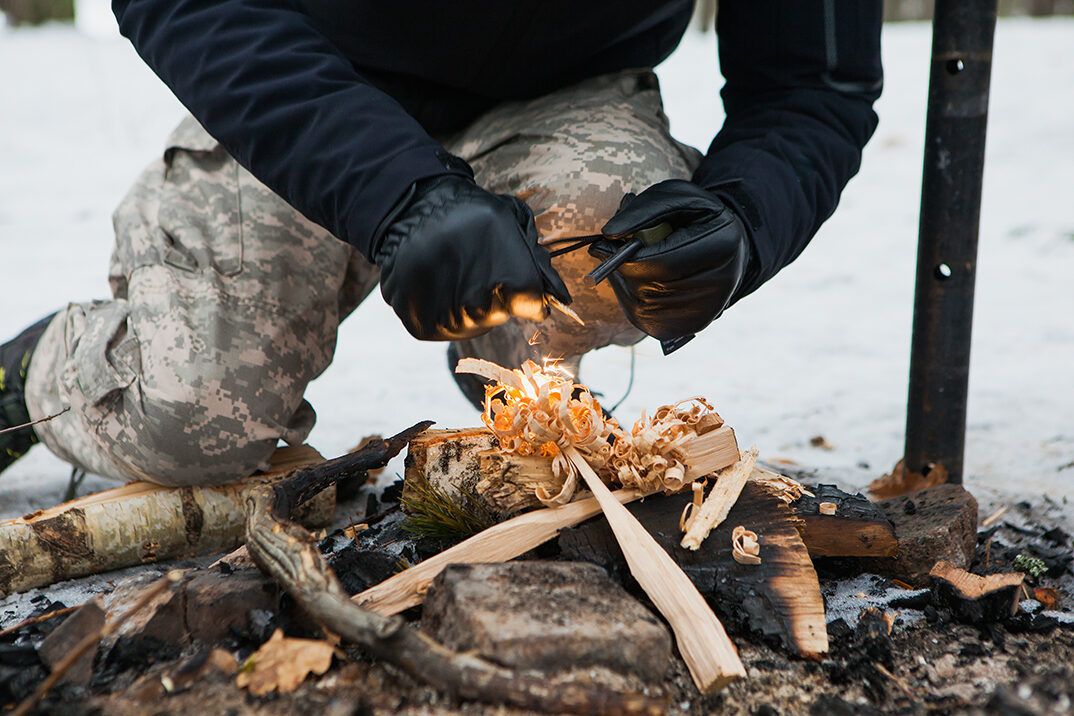
Dry kindling is crucial for starting a fire with just one match. Here are the best types of trees to find it in winter.
Assess the flammability of local materials by observing their ignition point, burning rate, and residue when exposed to a small flame. A simple test involves bu
To enhance one-match fire skills practicing alone, focus on proper match striking, maximizing wind protection, and efficient tinder use. Regular practice with c
To find dry tinder after rainy weather, search for dry leaves, grass, or moss, particularly in areas with south-facing slopes or under tree canopies. Look for d
A one-match fire can be challenging to sustain in high humidity, as the moisture in the air can quickly extinguish the flame. However, with proper technique and
Dried leaves can be effective as tinder in one-match fires, but their performance depends on factors such as leaf type, dryness, and arrangement.
LEFTOVER ASHES CAN AFFECT SUBSEQUENT ONE-MATCH FIRE ATTEMPTS BY REDUCING THE OXYGEN LEVELS IN THE CONTAINER, MAKING IT MORE DIFFICULT TO LIGHT THE NEXT FIRE. TH
One-Match Fires Can Be Used During Fire Ban Seasons Under Specific Conditions.
Using a bow drill can significantly improve your one-match skills by allowing you to create a sustainable fire source from a single match.
Yes, you can build a one-match fire in a snow-covered area, but it requires careful planning and execution. This method is known as a \
A dying fire can be reignited with a one-match method, but it requires careful technique and patience. The goal is to create a self-sustaining fire that will bu
Yes, you can start a fire with one match and no tinder, but it requires the right technique and materials.
Pre-packaged tinder is generally reliable for a one-match fire, but its performance depends on the quality of the tinder, the match's heat, and environmental co
A firesteel can be used as a reliable backup for one-match fires, especially in situations where a single match may not be enough to start a fire, or when the m
A lighter can be used as a backup for one-match techniques, but it's essential to prioritize the use of the single match to conserve resources and maintain the
Charcoal can be used as a fire starter in one-match fires, but it is not a recommended primary method due to its limitations in generating a strong flame. Charc
Yes, fatwood can be used as a one-match fire starter, but it requires some preparation and technique.
Moss can be used as part of a tinder bundle, but it is not the most ideal choice due to its high moisture content and potential to self-extinguish.
Yes, natural fibers can be used as tinder for one-match fires, but they need to be prepared correctly to catch fire quickly.
Yes, paper can be used as part of a tinder bundle to help start a fire, particularly in dry, windy conditions, when it's essential to get a flame going quickly.
Pine needles can be used as tinder in a one-match fire, but it's essential to prepare them properly to ensure they catch fire quickly.
Yes, sticks can be used as kindling for building a fire, but they need to be prepared properly.
Wet wood cannot be used with the one-match technique because it has a low ignition temperature and will not catch fire with a single match.
Urban fire building techniques can vary from wilderness survival due to different environmental conditions and available materials. While the fundamental princi
Yes, moisture content in wood significantly affects one-match fire ignition.
The size of tinder affects ignition success, with optimal tinder size being around 1/4 inch in diameter for efficient burning and ignition. Larger tinder pieces
WIND DIRECTION IS A KEY FACTOR IN SUCCEEDING WITH THE ONE-MATCH FIRE BUILDING CHALLENGE. A favorable wind direction can significantly improve your chances of su
To treat fire-related injuries during a one-match fire, prioritize stopping the burning process, cleaning the wound, and applying basic first aid principles to
Altitude can significantly affect the success of one-match fires due to lower oxygen levels and increased air pressure at higher elevations.
A sustainable fire can be determined by observing its burn rate, flame height, and overall appearance, ensuring it consistently produces a moderate-sized flame
Temperature significantly affects the success of one-match fires, as it influences the match's ignition temperature, which is typically around 2000°F (1093°C).
Terrain can significantly influence fire starting techniques by affecting wind, moisture, fuel availability, and accessibility, requiring adaptability and creat
Wind can significantly affect the success rate of one-match fires by extinguishing the flame or reducing oxygen supply.
To maintain proficiency in one-match fire techniques, practice them at least once a week, ideally every 3-4 days to avoid muscle memory degradation. Start with
To arrange fuelwood for a one-match fire, place a small tinder bundle at the base, followed by a teepee structure of dry kindling sticks, leaving enough space i
Adapting one-match fires for different altitudes requires careful consideration of oxygen levels, wind resistance, and fuel efficiency. To succeed, learn techni
Assess dryness of wood by looking for cracks, splits, and a light weight, and by performing a simple scratch test to check for sap and moisture content.
To avoid common mistakes in one-match fire building, focus on tinder dryness, use a suitable fireboard, and create a consistent spark path. A poorly executed fi
Choose kindling with a high surface area, low moisture content, and varied sizes to ensure efficient airflow and sustained combustion.
To create a fire lay for quick ignition, arrange three to four layers of tinder, kindling, and larger logs in a teepee shape, leaving space for airflow and a cl
Determine the best tender materials in your area by observing local plant life, noticing the materials that hold the most water and are least likely to burn, an
Enhance your one-match fire building techniques by practicing with different materials, experimenting with new methods, and gradually increasing the difficulty
To improve your fire building speed with one match, focus on creating a dry and prepared tinder area, master the concept of \
Making a fire starter using household items is a vital survival skill. It can be achieved with everyday items like a plastic container, steel wool, and a bit of
To preserve your fire materials during inclement weather, store them in a waterproof container or bag, keep them dry, and use a waterproof match or lighter when
To quickly assess the flammability of local materials, look for dry, combustible materials with low ignition temperatures, and perform a simple \
After rainfall, quickly locate dry tinder by searching for protected areas with reduced moisture levels, such as under large leaves, logs, or rock overhangs. Lo
Select a tinder size that can hold a good amount of tinder material, yet still easily catch fire and sustain a flame, typically 1/4 to 1/2 inch thick and 1 to 2