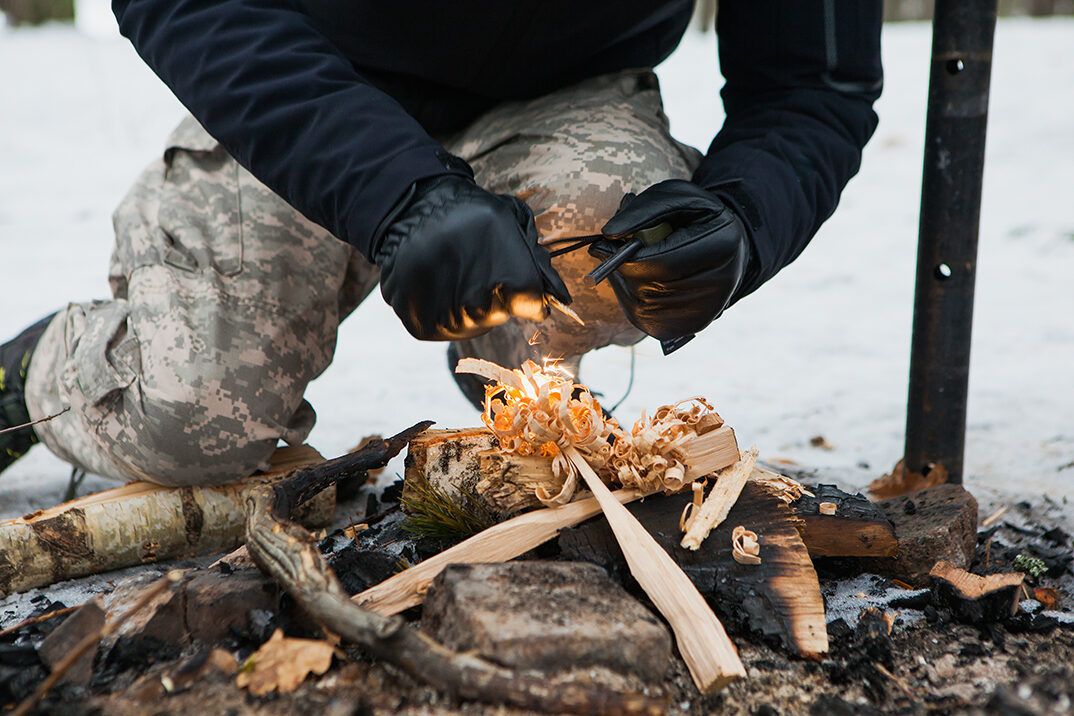
03 — Pillar · Survival
Expert guides and Q&A about navigation celestial stars.
Q&A in this topic
60 total
No, constellations are not the same in both hemispheres for navigation. The Northern Hemisphere and Southern Hemisphere have different sets of constellations vi
There are several apps for learning celestial navigation, including Star Walk, Sky Map, and Stellarium Mobile, which can help users identify stars, planets, and
Yes, there are modern tools available to aid celestial navigation, including smartwatches, handheld GPS devices with celestial mode, and apps that utilize augme
There are several books available for self-teaching celestial navigation, including the classic \
Yes, there are training courses available for celestial navigation skills, which can be used for sailing, aviation, and wilderness survival, among other applica
The best locations for practicing celestial navigation skills are areas with minimal light pollution, clear skies, and high altitude, allowing for better visibi
The best locations in the U.S. for celestial navigation practicing are areas with minimal light pollution and clear skies, such as rural Nevada, Arizona, or New
To navigate in remote areas without technology, use a combination of observation skills, knowledge of celestial bodies, and a reliable map. Understand your surr
To observe stars effectively for navigation, it's essential to know the constellations, use a compass for orientation, and take precise measurements of star pos
To teach celestial navigation to beginners, focus on understanding the relationship between the position of the stars, sun, and moon, and how to use a sextant o
The best time for observing constellations while navigating is typically between 10 PM and 2 AM, when the sky is usually darkest and most stars are visible.
The best time to find the Southern Cross is during the winter months in the Northern Hemisphere and the summer months in the Southern Hemisphere, typically from
Best Time Of Year For Stargazing And Navigation is during the periods of least moonlight, typically in the months of October to March, when the nights are darke
For celestial navigation on a hiking trip, the best tools are a compass, a watch, and a detailed star chart or planetarium app. They enable you to use the North
Light Pollution Can Affect Celestial Navigation Accuracy, especially in areas with high levels of artificial light, reducing visibility of stars and making it h
The Plough can be used to help navigate without other celestial aids, particularly in the northern hemisphere. It's a recognizable asterism that can be used as
The Southern Cross can be used for latitude determination when it is at least 20 degrees above the horizon, allowing the observer to measure the altitude of the
Yes, you can accurately estimate time using stars by using the North Star (Polaris) as a reference point and observing the position of other stars in the night
Celestial navigation can be effectively combined with other survival skills to increase chances of finding direction and staying safe in the wilderness.
True North can be found without the North Star using other celestial navigation techniques and references.
Yes, you can navigate using only one constellation, specifically by identifying specific stars and patterns within it, and understanding the relationship of tho
Yes, you can navigate using the North Star alone by observing its position in the night sky and using its altitude to estimate your direction and latitude.
The North Star, also known as Polaris, can be relied upon for direction at most times, but not under certain conditions. It will always be approximately above t
While the stars can be a reliable aid for navigation, it's generally recommended to use them in conjunction with other methods, such as the sun and landmarks, t
The Southern Cross, also known as the Crux constellation, is visible year-round in Australia from almost any location south of the tropics, but its visibility c
Yes, you can teach yourself celestial navigation from home with a good textbook, a computer, and practice.
While human memory can be reliable for recognizing constellations, it's essential to understand the limitations of short-term and long-term memory recall, espec
Yes, a smartphone can be used for celestial navigation with the right apps and knowledge of the stars.
Celestial navigation can be aided by artificial light, but it should be used sparingly and with caution to avoid disrupting the natural visibility of the stars.
Yes, you can use landmarks along with celestial navigation techniques to increase accuracy and confidence in your navigation. This method is called \
Yes, you can use light pollution to your advantage in navigation, by recognizing the patterns of city lights and skyscrapers that can help you identify your loc
SHADOW navigation can be used for celestial navigation techniques in certain situations.
Using stars to navigate in urban environments is not highly effective due to the obstruction of light pollution, making it challenging to identify constellation
The moon can be used for celestial navigation, providing a reliable source of light for nocturnal navigation. By measuring the moon's position in the sky, you c
Beginners in teaching celestial navigation often underestimate the importance of accurate timekeeping, misinterpret star patterns, and fail to account for atmos
Navigating without proper celestial navigation knowledge can lead to disorientation, increased risk of accidents, and potential fatalities due to incorrect cour
Celestial navigation and map reading skills are distinct methods used to determine one's location and course. While map reading relies on visual references like
Celestial navigation during winter months can be challenging due to reduced visibility of certain stars and constellations, as well as increased atmospheric dis
Many cultures have developed their own celestial navigation methods to aid in wayfinding, but not all have been documented or widely adopted. Various techniques
Different cultures use various sets of stars for navigation, as they often rely on the constellations and patterns that are most visible in their respective reg
Moon phasing can affect celestial navigation visibility by reducing the brightness of the night sky, making it harder to spot certain stars and constellations,
The North Star, also known as Polaris, serves as a reliable guide for sailors in open waters. It is located almost exactly at the North Celestial Pole, which ma
The North Star, also known as Polaris, appears to move throughout the year due to the Earth's slight wobble on its axis.
Beginners can easily identify the Big Dipper, Orion's Belt, and the North Star as the first constellations to learn for navigation.
For beginners learning celestial navigation, essential gear includes a sextant, an altazimuth or equatorial mount telescope, and a set of star charts or an ephe
Celestial navigation is a morally sound option when traditional methods are unreliable, but it's crucial to acknowledge the historical role of celestial navigat
Clouds can significantly impede your ability to navigate using celestial bodies, such as stars and planets.
To improve your star identification skills, learn the constellations, practice observing with binoculars or a telescope, and use a star chart or app to identify
Weather conditions can significantly impact star visibility at night, reducing clarity and limiting the number of stars visible due to cloud cover, light pollut
Weather affects celestial navigation techniques by distorting the position of celestial bodies, making it more challenging to determine accurate time and locati
Your location significantly affects your celestial navigation techniques, as the position of the stars and constellations changes based on latitude and time of
Practicing celestial navigation in different locations is crucial for developing a comprehensive understanding of the night sky and its patterns. This skill is
With dedication and practice, a beginner can learn the basics of celestial navigation in 1-3 months, while mastering it can take 6-12 months or longer.
Celestial navigation uses 32 constellations to determine a ship's position and course. These constellations are part of the International Celestial Reference Sy
Navigators typically update their skills every 6 to 12 months to ensure proficiency in celestial navigation, as the skills can deteriorate with time if not prac
Update your celestial navigation skills every 3-5 years, or whenever you undergo significant changes in your environment, occupation, or lifestyle, such as a mo
Adjusting navigation skills during different seasons involves adapting to seasonal changes in daylight hours, weather conditions, and astronomical events. This
To combine land navigation with celestial navigation techniques, use a sextant to measure the angle between the sun, moon, or stars and the horizon, then apply
Create a constellation map for night navigation by identifying a prominent star, determining your direction, and mapping out key constellations like the Big Dip
To determine your position using stars, locate the North Star (Polaris) and note its position, then use it as a reference to identify the constellation Ursa Maj